
- Coloring Process On A Live Edge Bowl with Dale Slaughter
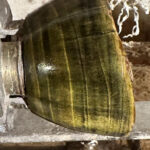
 This is a natural edge bowl sanded to 320 grit. Using Hampshire Sheen intrinsic colors, I apply the colors by folding a piece of paper towel into ...
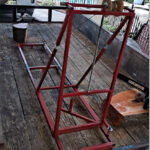
 - Homemade Chainsaw Mill by Bob GrinsteadHere is my chainsaw mill for those who haven’t seen it. I folds up into a small package you can put into your car. 4 pieces total. The beauty of this is I only load the logs once, then leave them on my trailer to cut. In use, I load the logs on my trailer, then ...
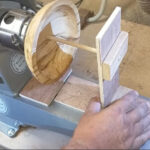
- Depth Gauge by Robert EdwardsBy Robert Edwards This accessory can be constructed in order to determine the thickness of the bottom of a vessel. Using plywood or similar material, cut two pieces approximately 6” long and 4”wide. Assemble at right angles to each other. On the bottom piece, attach a piece of stock that fits between ...
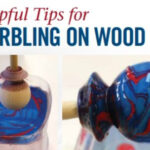
- Marbling on Wood by Walt WagerIf you would like your own hardcopy of this description, click here In this demonstration I will turn a platter, marble the rim, and show how the platter is finished. The demonstration will be staged with some pieces pre-prepared because some steps require drying overnight. However, the audience will see every step in the ...
- Segmented Ring Alignment Jig by Billy BurtI started with a piece of laminated plywood from an old cabinet. It was only slightly larger than the round piece in the photos. I took a 1-1/2″ x 5″ block of ...
- Making a Lathe Sanding Block by Matt HarberIf you would like your own hardcopy of this description, click here Used for quickly sanding the bottoms of finished pieces I use a sanding block to sand the simple bottom of my pieces. The block fits my scroll chuck, and is constructed out of leftover scrap wood, foam, and Velcro. The foam allows the ...
- Mirror Finish with Polymerized Tung Oil by Dane ChandlerThe first step to getting a great finish on your turned vessel begins with the finish off the gouge and skew. Tool marks, tearout, and excessive sanding are a detriment to great finish and must be avoided. Begin sanding at 220 grit and finish with 320/340 grit; sanding in an oscillating ...
If you have a tips or tricks article you would like published, please let us know. We would love to publish it on our site. Let us know or send us a copy below: