
In my opinion, one of the most sacred duties that a woodturner is tasked with is creating a funerary urn. To be entrusted with the final resting place of the remains of a loved one can feel a little daunting.
Very simply, an urn is a lidded box or vessel. From there, the sky is the limit in regards to design, features, and details.
Club member Chris Neilan has been in the funeral industry for more than 49 years. In his experience, 200-225 cubic inches is the primary urn size for adult remains. The reason for this is simple:
“What remains to be interred after cremation is skeletal calcium,” said Neilan. This volume is fairly constant, contrary to the commonly known formula of body weight to cubic inches. Whether the deceased weighed 400 lbs or 200 lbs, the volume of crematory remains is the same, because all that remains is calcium from the bones.
“The bone mass does not change,” Neilan added. “Soft tissue, and even a casket, if used, goes up the flu. The bones are then ground in an industrial
grinder and processed into what we call ash.”
Worldwidewoodturners.org has a calculator titled “What’s My Volume (https://www.worldwidewoodturners.org/whats-my-volume/),” that is invaluable. This calculator enables you to approximate the size and shape of your urn using measurements you input, with which you can determine the inside volume of your turning, and adjust your design to accommodate the cremated remains.
In the industry, adult urns range from 200-225 cubic inches. For pets, there are small, medium, and large sizes, ranging from 15 cubic inches (keepsake urns) to 200 cubic inches (human sized) for giant breed dogs.
There is little to no regulation in regards to the urn except when being transported or shipped with remains inside it.
For air travel, an urn must be sift-proof and securely closed to prevent spillage, both of which are common sense considerations when creating a funerary urn of any design.
In the US, the US Postal Service is the only allowed carrier for urns bearing remains. Urns must be properly sealed (firmly closed and sift-proof), and must be boxed in a free Priority Mail Express Cremated Remains box provided by the Post Office. Urns containing remains can only be shipped via Priority Mail Express (domestically), or Priority Express International (when allowed by the
destination country).
Some things we should take into consideration when turning urns are:
- How dry is the wood? A hollowform could warp or crack if the wood is not properly dried, rendering it unusable as a funerary urn. Ensure your wood is fully dried, especially if you’re using segments of logs. If you’re doing a segmented urn, consider purchasing kiln dried lumber.
- How will it be closed? Although it may be acceptable to make a firm fitting friction fit lid for an urn, it’s preferable to make a threaded closure, whether that is by using metal threaded inserts, or threading your urn and lid yourself. When securing a threaded insert to your urn’s body, remember that wood moves – I recommend using a flexible CA glue such as Parfix 400C.
- Will it be shipped to the customer? Urns should be “sift-proof,” in other words, they need to be air tight. If you made your urns with a threaded closure, screwing the lid on tightly before shipping the (empty) urn to a customer could create conditions where differing pressures between the interior and exterior during flight cause the urn to split. Loosen the lid, or wrap it separately from the body of the urn to prevent this occurrence.
- What is the relative humidity where the urn is going? I live in the South, where the average humidity is high. I have shipped lidded boxes to family on the West Coast, where there is a much dryer climate. Lids that were perfectly friction fit have either split or become a permanent fixture.
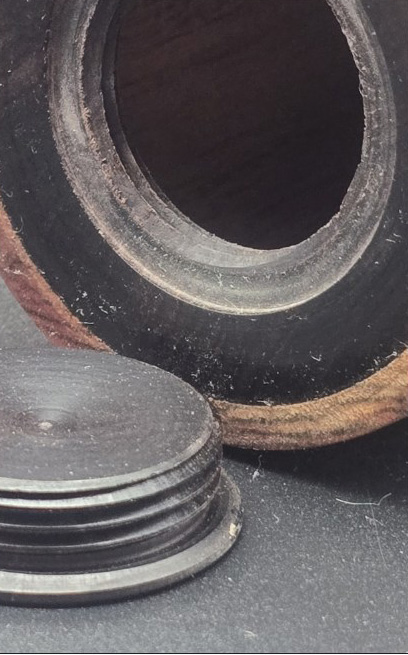
I recommend recipients give lidded vessels, such as an urn, a week or two to acclimate, ensuring not only that the wood won’t split or crack, but that the lid doesn’t warp as well. Flexible glue between body and threaded insert assists with this, allowing the wood to move without losing the glue’s bond.
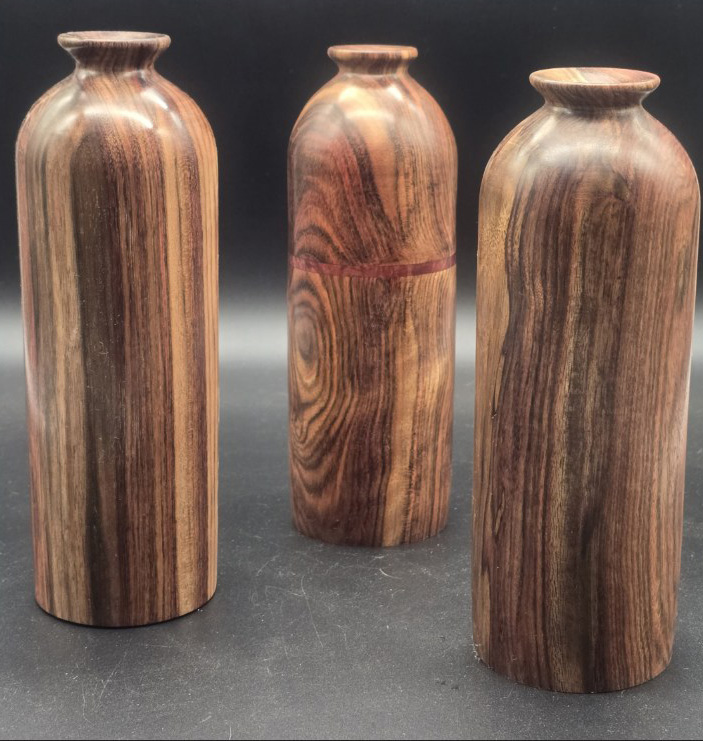
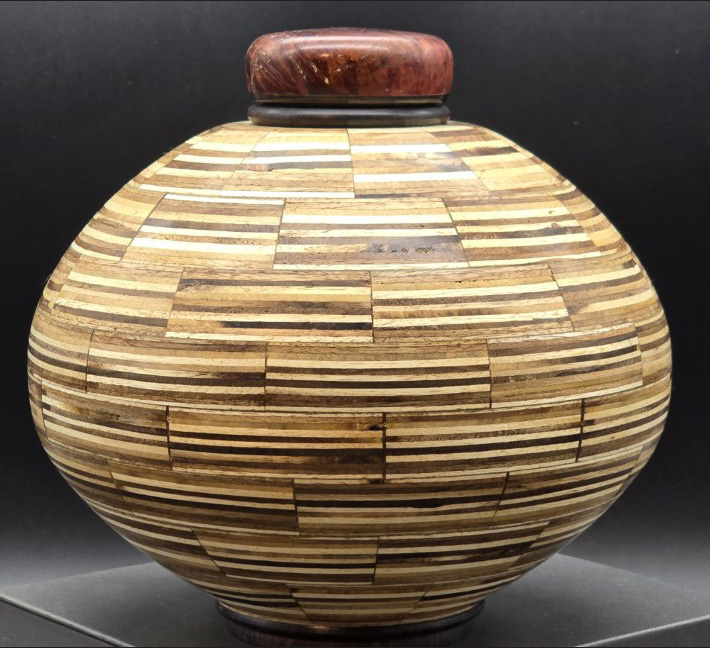
I can’t tell you what your urns should look like. Every turner and customer has their own aesthetics and their own preferences.
What makes an urn special, however, is the care and craftsmanship which the turner puts in to its creation. Accentuating wood grains, design, materials, threaded inserts for lids, all can be factors in creating a lasting memorial to a loved one.
However you choose to make an urn, I encourage you to remember the end use, and make it with reverence.